

Contents
ToggleBreast Enlargement
What is Breast Augmentation?
Breast augmentation aesthetics are operations performed to increase the fullness of the breasts and provide symmetry. Surveys show that breast augmentation surgeries are the surgical procedures with the highest patient satisfaction in aesthetic surgery. The first silicone breast implants were used in the USA in 1963. Breast augmentation procedures are the fastest growing type of aesthetic surgery in the world, and in 2010, 296 thousand women had breast augmentation surgery in the USA alone. It is stated that this figure increased by 39 percent compared to 2000.
Breast augmentation aesthetics can be applied to anyone who is uncomfortable with their breasts being small and whose breast development has completed. Postpartum sagging, rapid weight loss, and aging constitute the majority of patients who apply for breast augmentation surgery.
How is Breast Augmentation Performed?
Breast augmentation surgery can be performed using silicone implants or by using a filling procedure.
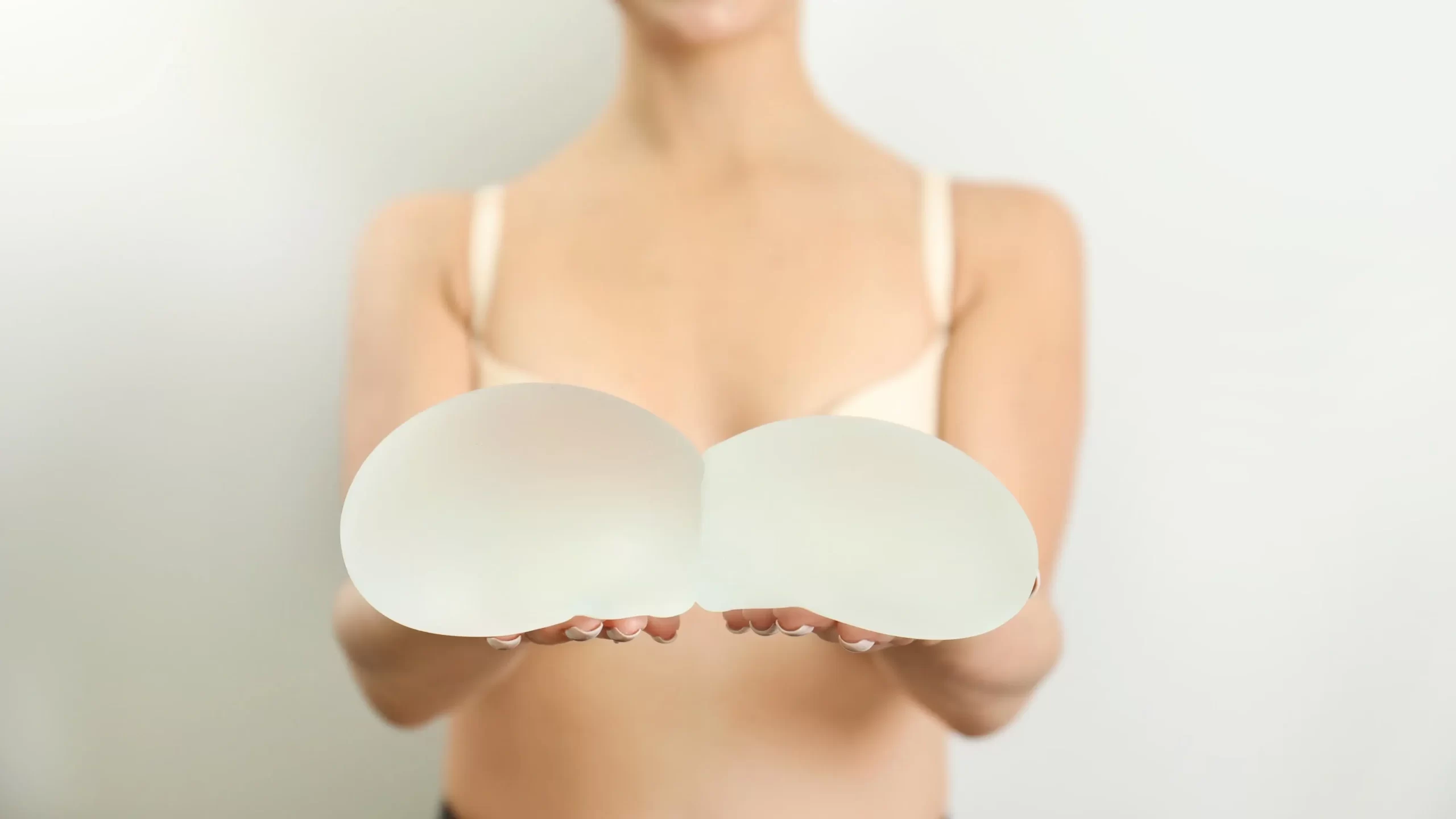
For silicone implant application, the patient is examined and the appropriate silicone prosthesis is selected by taking into account the patient’s rib cage structure, height and body anatomy. This prosthesis can be round or water drop-shaped. After a 5-centimeter hidden incision is made near the sub-breast groove, the silicone is placed in the prepared area.
In the filling procedure, the aim is to increase the breast volume by using the person’s own fat tissue or ready-made filling materials.
Will There Be Any Scars After Breast Augmentation Surgery?
It is unlikely that there will be no scars in breast augmentation surgeries. However, where and how big the scar will be is directly proportional to your doctor’s skills. In these types of surgeries, a small incision of about 3 cm is made in the area under the breast.
How Many Hours Does Breast Augmentation Surgery Take?
Breast augmentation surgeries take an average of 1.5-2 hours, depending on the scope of the surgery. After the surgery, the breasts are dressed and a special bra is used. Post-operative pain is controlled with medication and your complaints will decrease and disappear from the second day onwards. If necessary, you can stay in the hospital for 1 day or, if office surgery is performed, you will be discharged within a few hours.
What are the Types of Breast Prostheses?
Since breast shape and size are important, it is essential to be honest and open about your expectations when talking to your plastic surgeon. The factors that determine the type and size of the prosthesis are not limited to your desired growth rate. Your breast anatomy, the elasticity of your skin and your body type are of great importance.
Breast prostheses are divided into two main categories: prostheses filled with salt water and silicone breast prostheses. After the ban on silicone prostheses in 1993, the use of water-filled prostheses became widespread. In the event of leakage of prostheses containing salt water, the prosthesis is emptied and the salt water is absorbed by the body and expelled naturally. With the lifting of the bans on silicone prostheses and the development of silicone technology, the use of this type of prostheses has decreased.
Silicone breast prostheses consist of a silicone shell filled with a dense gel. The consistency of the gel is close to breast tissue and does not feel different from the breast under normal conditions. Prostheses can be round or teardrop-shaped. There are many prosthesis options designed in different shapes according to different body structures and breast shapes. You should decide with your plastic surgeon which type of implant is most suitable for you based on your desired size, your body structure and the characteristics of your breasts.
Is There an Age Limit for Breast Surgery?
The end of puberty is very important in breast surgeries. Because the breast can continue to develop throughout puberty. However, if it creates a psychological problem for people with asymmetrical breasts, where one breast develops more than the other during puberty, it is possible to equalize the underdeveloped breast with the other breast at an early age with a breast prosthesis.
If the breasts have completed their growth, prosthesis surgeries can be performed after the age of 18. In reconstruction cases and in some special cases, breast augmentation surgeries can also be performed before the age of 18.
Does Breast Silicone Cause Allergy?
The substances that make up breast silicones are found in many substances that we use in our daily lives, such as various creams, deodorants, soaps, processed foods, and waterproof coatings. If you experience various allergic symptoms as a result of using these types of substances, breast silicones will also cause these symptoms. However, breast silicones are one of the substances that are most compatible with the body. Therefore, allergy to this substance is extremely rare.
What Should You Pay Attention to Before Breast Augmentation?
It is important to stop smoking 1 week or 10 days before breast augmentation surgery so that it does not negatively affect wound healing. Aspirin, vitamin E and similar blood thinners should be stopped 10 days before surgery to prevent unwanted and difficult to stop bleeding. A number of tests and examinations are performed to determine whether the patient has a condition that prevents surgery. It would be a practical choice for the person to wear pajamas that open in the front on the day of surgery.
What Are the Expected Results After Breast Augmentation Surgery?
Three hours after breast augmentation surgery, it is possible to eat and stand up. Patients are discharged the same day or the next day. In the first days after surgery, increasing pain may be felt with arm movements. Pain may be felt more and for a longer period with submuscular applications. It is normal to feel pressure in the chest in the first weeks. The patient is usually called for a check-up a few days after the surgery. After this check-up, you can start your daily activities, return to work, and drive.
The appearance of the implants is unnatural for the first three weeks and they sit higher than normal. From the third week onwards, they begin to soften and shrink to their normal size. It takes approximately three months for the breasts to take their full shape.